
What's the difference between SDA and SIL?
By The Find My SDA Team · Updated 30 Aug 2026
Short answer
SDA (Specialist Disability Accommodation) funds specialist housing for people with very high support needs. SIL (Supported Independent Living) funds support workers who help you with daily tasks in that home. SDA pays for where you live; SIL pays for the support you get there. Many people have both.
If you're new to the NDIS, it's easy to mix up Specialist Disability Accommodation (SDA) and Supported Independent Living (SIL). Both show up in home and living plans, but they pay for different things. This guide breaks down what each one covers, when you might need both, and how they connect to things like rent contributions and choosing who you live with. If you have very high support needs, it also helps to understand how this fits with options like high physical support SDA and living arrangements where family stays with you.
What is SDA?
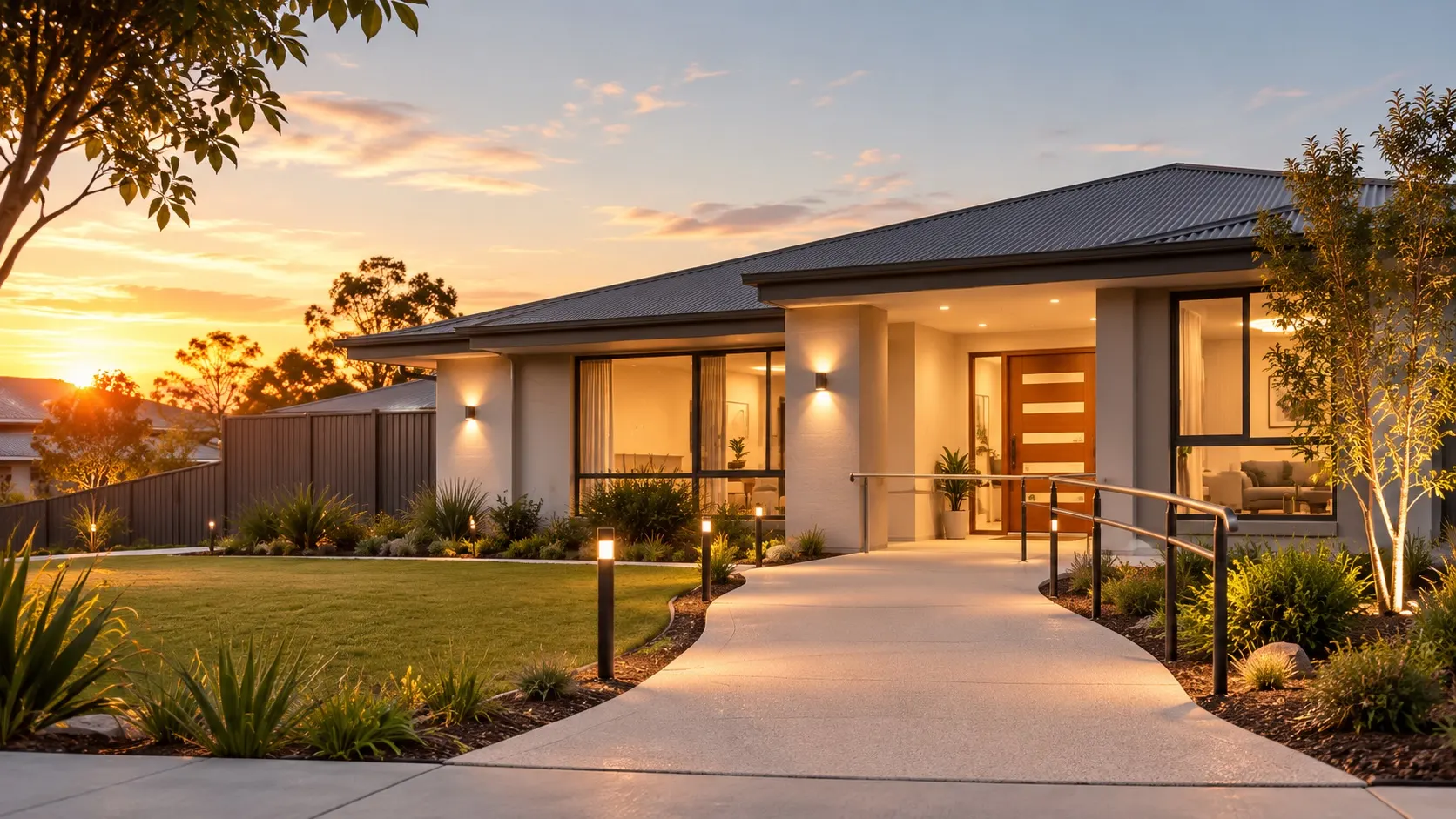
SDA stands for Specialist Disability Accommodation. It's a type of housing funded, or partly funded, by the NDIS for people with extreme functional impairment or very high support needs. SDA homes are built or modified with accessible features, like wide doorways, wheelchair friendly kitchens, ceiling hoists or backup power, so residents can live more safely and independently.
SDA can be a house, apartment, villa, duplex or townhouse. It's not for everyone on the NDIS. The NDIS only includes SDA funding in a participant's plan if they meet strict criteria around the level of support they need.
What is SIL?
SIL stands for Supported Independent Living. It's funding for a support worker to help you with daily tasks, for up to 24 hours a day, 7 days a week, depending on your needs. SIL is designed to help you live as independently as possible while building your skills over time.
SIL support workers might help with things like personal care, cooking, cleaning, shopping or building a daily routine. SIL doesn't pay for your home itself. It pays for the people who support you inside it, whether that's a home you own, a private rental, or an SDA property.
What's the main difference between SDA and SIL?
The simplest way to think about it is that SDA pays for where you live, and SIL pays for the support you get once you're there. SDA is about the building itself, its design, its accessibility features and its suitability for people with very high support needs. SIL is about the people who help you day to day, regardless of what kind of home you're in.
Because they fund different things, you can have one without the other, both together, or neither. Someone might live in an SDA property but manage their own daily support, so they'd have SDA funding without SIL. Someone else might live in an ordinary rental with SIL support and no SDA funding at all.
Can you get SDA and SIL at the same time?
Yes. Many people who live in SDA housing also have SIL funding in their plan. The SDA funding pays the SDA provider for the accommodation, while SIL funding pays for the support workers who help you inside that home. You still pay your own rent contribution and day to day costs like electricity, separate to both of these.
Having both isn't automatic. Each one is assessed separately against your own goals and support needs, so your NDIS plan needs to include both types of funding for you to access both supports.
Do you need SDA to get SIL, or SIL to get SDA?
No, they're independent of each other. You don't need SDA to qualify for SIL, and you don't need SIL to qualify for SDA. Plenty of people access SIL support in a home that isn't SDA approved, and some SDA residents manage their daily support without SIL.
This separation also means you're not locked in. If you're unhappy with your SIL provider, you can look at other support options without having to move house. And if you want to move to a different SDA property, you can usually keep your existing SIL supports in place.
How much do you pay for SDA and SIL?
If you live in SDA housing, you pay a reasonable rent contribution to your provider, on top of your NDIS funding. This is capped by the NDIS, and it's based on a set share of the Disability Support Pension and Pension Supplement plus Commonwealth Rent Assistance, so it doesn't change based on how nice or expensive the property is. You can read the details in our guide on reasonable rent contributions.
SIL funding works differently. It's based on the level of support you actually need, as assessed by the NDIS, and it's paid to your support provider rather than to you directly. You're still responsible for your own everyday costs like food and personal items.
Who decides if you're eligible for SDA or SIL?
The NDIA, the agency that runs the NDIS, decides whether SDA or SIL funding goes into your plan, based on evidence from your planning meetings, assessments and reports from your treating professionals. For SDA, they'll usually want to see that other, less specialised housing options have been considered first.
Eligibility can change over time as your circumstances change, and the NDIA reviews plans periodically. If you think you might need SDA, SIL, or both, it's worth raising this with your planner or support coordinator so they can help gather the right evidence.
Common questions
Can I live in SDA without SIL support?
Yes. Some people in SDA housing manage their own daily support or use other funding types instead of SIL, depending on their needs and plan.
Is SDA the same as a group home?
Not necessarily. SDA is about the physical building and its accessibility features. Some SDA properties house one person, others house a small group of residents who each have their own SDA funding.
Does SDA funding cover my rent in full?
No. SDA funding goes to your provider for the specialist housing costs, but you still pay a reasonable rent contribution and everyday costs like electricity.
Who pays SIL support workers, me or the NDIS?
The NDIS pays your SIL funding directly to your support provider, who then employs or rosters the support workers. You don't pay support workers out of your own pocket.
Can my SIL supports move with me if I change SDA properties?
In most cases, yes, since SDA and SIL are separate funding types. Talk to your support coordinator before any move to check how it would work for your specific plan.
This article is general information only, not advice. The NDIS decides what's included in your plan, and eligibility rules can change. Talk to your NDIA planner, Local Area Coordinator or support coordinator about your own situation.